Why Hydraulic Cylinder Seals Fail in UAE Conditions, and How to Fix It
Short answer: Hydraulic cylinder seals rarely fail at random. In the UAE the main causes are heat (oil above 85°C hardens nitrile seals), fine sand dragged past a damaged wiper, extrusion under high pressure, and dieseling from trapped air. A lasting repair fixes the cause: the right seal material, a restored rod and clean oil.
Cylinder seal degradation is rarely a random occurrence. By inspecting worn polyurethane seals, PTFE energizers, and guide rings during workshop disassembly, engineers can pinpoint hydraulic circuit overheating, contamination, or pressure spikes.
ASAT Engineering Department
Cylinder Overhaul Division
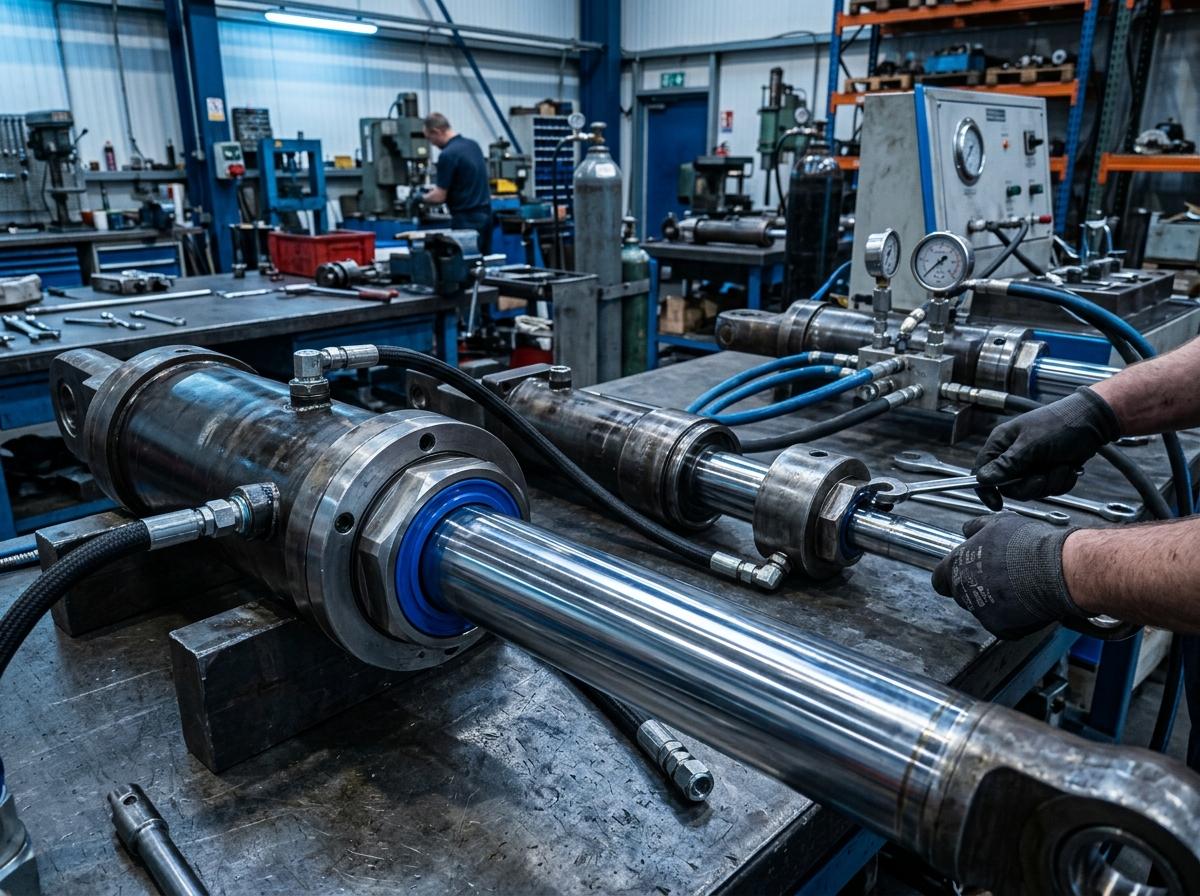
Hydraulic cylinders convert pressurized fluid energy into high-force linear motion across excavators, cranes, industrial presses, and marine handling equipment. At the heart of every cylinder is a precision seal arrangement operating under dynamic contact pressures exceeding 350 bar. When seals fail, understanding the physical damage pattern provides invaluable data for preventing repeat failures.
Common Seal Failure Modes
During workshop teardowns at ASAT, our engineers systematically categorize damaged seal packages into specific failure classifications:
- Extrusion and Nibbling: High pressure forces seal elastomer into the clearance gap between the piston and barrel or gland and rod, fracturing the heel of the seal.
- Hardening and Cracking: Continuous exposure to fluid temperatures above 85°C leaches plasticizers, leaving seals brittle and unable to maintain radial sealing force.
- Axial Scoring & Particle Imbedment: Contaminants trapped against the dynamic sealing lip create continuous leak channels along the chrome rod.
- Spiral Failure: Long-stroke cylinders operating under uneven lubrication experience circumferential twisting of O-rings and backup rings.
Thermal Hardening in Middle East Climates
In the UAE and wider Gulf region, hydraulic machinery operates in ambient temperatures often exceeding 48°C in direct sunlight. If cooling circuits or heat exchangers are restricted, hydraulic fluid bulk temperatures can easily exceed 90°C. Standard nitrile (NBR) seals degrade rapidly under these conditions. Specifying high-temperature fluorocarbon (FKM/Viton) or specialized hydrolysis-resistant polyurethane (H-PU) is essential for extended operating life.
Abrasive Ingress Past the Wiper
Fine desert silica sand is extraordinarily abrasive. When rod wipers suffer minor cuts or loose radial pre-load, airborne particles adhere to the lubricating oil film on the extending rod. Upon retraction, grit is dragged past the wiper into the primary rod seal and bronze guide bushes, accelerating wear.
The "Diesel Effect" (Micro-Dieseling)
When entrained air bubbles in the hydraulic fluid are subjected to rapid, sudden pressure spikes, the adiabatic compression generates localized temperatures exceeding 1,000°C. This causes spontaneous ignition of the oil vapor mixture in the bubble, resulting in scorched, charred spots and pitting on the leading edge of polyurethane piston seals.
Workshop Rebuilding Best Practices
At ASAT Hydraulic Repairing, cylinder refurbishment involves complete barrel micrometer measurement, light honing to recreate proper oil-retention cross-hatch, precision rod micro-polishing, and replacement with premium OEM-grade multi-stage seal packages tested on our hydrostatic bench up to 350 bar.
Frequently asked questions
Why does my cylinder leak at the gland?
- Usually a worn or damaged wiper or rod seal, or fine dirt past the wiper scoring the rod. Heat can also harden the seal. Scoring on the rod needs fixing too, or the new seal will fail again.
Which seal material is best for hot climates?
- For oil above about 85°C, fluorocarbon (FKM, Viton) or hydrolysis resistant polyurethane is a better choice than standard nitrile. The material should match the fluid and the operating temperature.
Is a reseal enough, or does the rod need work?
- A reseal is enough when the rod and barrel are within tolerance. If the rod is scored or bent, it needs polishing, rechroming or replacement, or the new seals will be damaged.
Related Workshop Engineering Services
Hydraulic Cylinder Manufacturing, Repair & Maintenance
Reseal, honing, rechroming and new rods, tested to 350 bar.
Related Engineering Insights
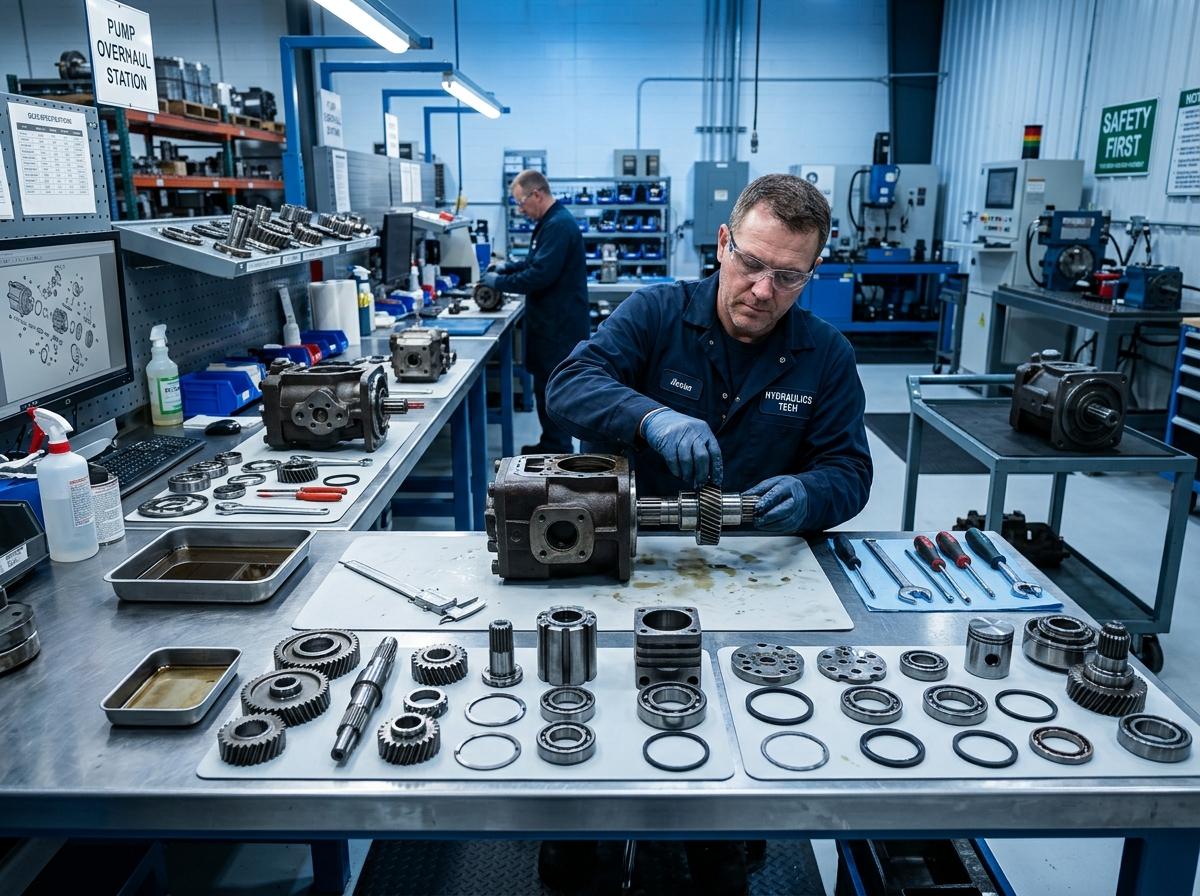
Hydraulic Pump Cavitation: Causes, Warning Signs and How to Stop It
Understanding the physical mechanisms of vapor cavity implosion, intake line restrictions, and oil aeration that lead to premature axial piston pump destruction.
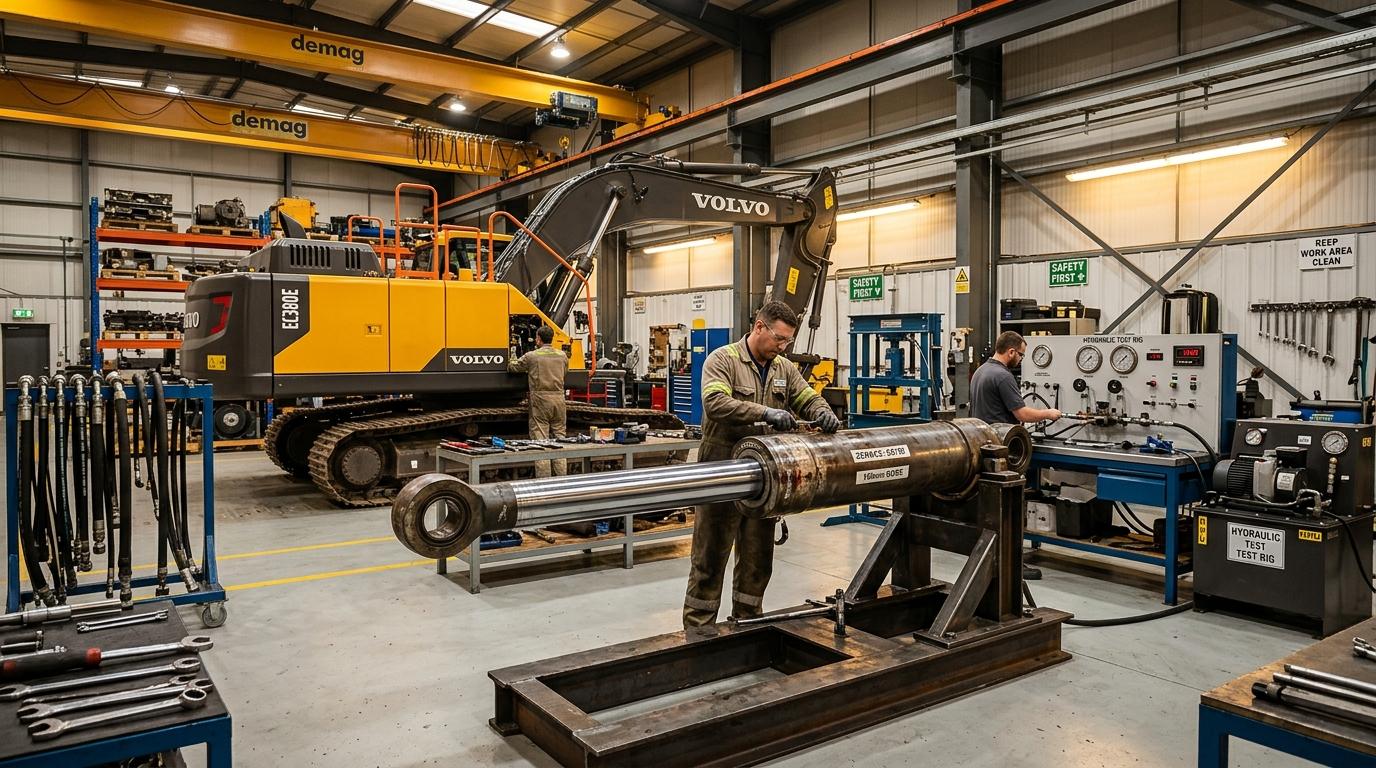
ISO 4406 Oil Cleanliness Codes Explained for UAE Hydraulic Systems
Why fluid contamination accounts for up to 80% of hydraulic component failures, and how to maintain strict ISO particulate target codes.
Repair or Replace? Limits for Hydraulic Cylinder Rods and Barrels
Engineering criteria for assessing whether scored cylinder rods, damaged eye mounts, and worn barrels should be precision remanufactured or replaced.
Have a Hydraulic Cylinder, Pump, or Valve Requiring Repair?
Consult directly with ASAT Hydraulic Repairing's senior technicians in the UAE. We provide comprehensive root-cause diagnostics, precise workshop teardowns, OEM-standard rebuilding, and certified pressure testing up to 350 bar.
Request a Service Quote
Share your machinery details for immediate technical evaluation.